Introduction: AI Hiring Is More Than Technical Skills
When Canadian companies hire AI professionals, the focus often starts with technical qualifications — machine learning frameworks, cloud platforms, deployment experience, and coding expertise. While these skills are critical, they are not the only factor that determines hiring success.
In today’s competitive AI recruitment landscape, company culture plays a decisive role. AI professionals are in high demand, and they have options. The organizations that attract and retain top AI talent are those that offer not just competitive compensation, but a culture that supports innovation, growth, and collaboration.
For Canadian businesses looking to build strong AI teams, culture is no longer a secondary consideration — it is a strategic advantage.
1. AI Professionals Value Innovation-Driven Environments
AI talent thrives in environments where experimentation and innovation are encouraged. Professionals working in artificial intelligence are naturally curious, analytical, and forward-thinking. They want to test ideas, improve systems, and push technological boundaries.
Companies with rigid structures, slow decision-making, or resistance to change often struggle to retain AI professionals. On the other hand, organizations that:
-
Encourage experimentation
-
Support research and development
-
Invest in modern tools and infrastructure
-
Empower teams to innovate
are far more attractive to AI candidates in Canada’s competitive hiring market.
2. Collaboration Is Critical for AI Success
AI projects rarely succeed in isolation. Data scientists, AI engineers, product managers, and business leaders must work together to translate ideas into deployable systems.
A collaborative culture ensures:
-
Clear communication between technical and non-technical teams
-
Faster decision-making
-
Better alignment with business goals
-
Reduced project bottlenecks
When collaboration is embedded in company culture, AI professionals can focus on delivering results rather than navigating internal friction.
3. Learning and Growth Drive Retention
Artificial Intelligence evolves rapidly. New frameworks, tools, and methodologies emerge every year. AI professionals value continuous learning opportunities that allow them to stay current.
Organizations that prioritize:
-
Professional development budgets
-
Access to conferences and certifications
-
Internal knowledge sharing
-
Mentorship programs
are more successful in retaining high-performing AI talent.
In Canada’s AI hiring market, offering growth opportunities can be just as important as offering competitive salaries.
4. Flexibility and Work-Life Balance Matter
The rise of remote and hybrid work has reshaped expectations across the tech industry. AI professionals often seek flexibility that allows them to maintain productivity while balancing personal commitments.
Companies that offer:
-
Remote or hybrid work models
-
Flexible hours
-
Results-oriented performance measurement
are better positioned to compete with global employers. Since Canadian AI professionals can work remotely for international companies, local organizations must create cultures that support modern work expectations.
5. Ethical AI and Responsible Practices Build Trust
AI professionals are increasingly concerned about the ethical implications of their work. Issues like data privacy, bias in algorithms, and responsible AI development matter deeply.
A company culture that emphasizes:
-
Transparent AI governance
-
Responsible data usage
-
Compliance with regulations
-
Fair and unbiased systems
attracts professionals who want to build meaningful and trustworthy technology. Ethical alignment strengthens both recruitment and long-term engagement.
6. Culture Impacts Employer Brand in AI Hiring
In Canada’s tight AI talent market, employer reputation spreads quickly. Reviews, employee testimonials, and professional networks influence candidate decisions.
A strong culture contributes to:
-
Positive employee referrals
-
Stronger employer branding
-
Higher offer acceptance rates
-
Lower turnover
Companies known for supportive, innovative environments naturally attract stronger AI candidates.
7. Cultural Fit Enhances Long-Term Performance
Hiring an AI professional with strong technical skills but poor cultural alignment can lead to disengagement or early turnover. Cultural fit ensures that employees:
-
Share organizational values
-
Work effectively within teams
-
Contribute positively to the work environment
-
Align with long-term strategic goals
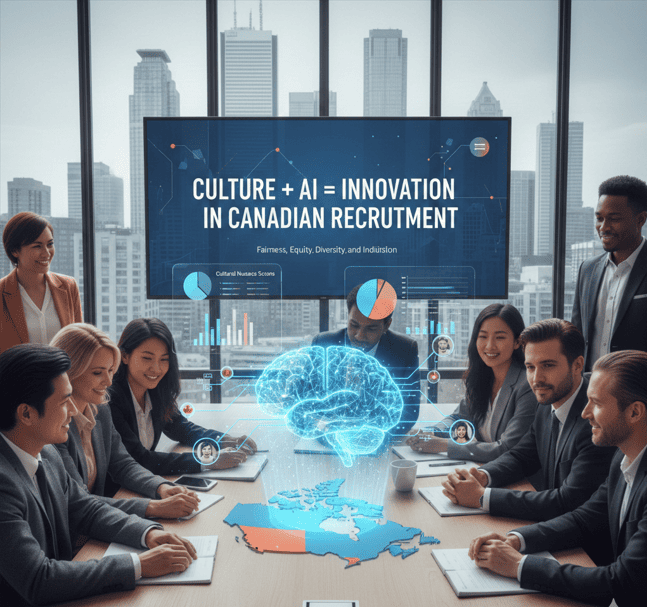
Recruitment strategies must evaluate both technical capability and cultural compatibility to achieve sustainable success.
8. The Role of Strategic Recruitment in Cultural Alignment
Because culture plays such a significant role in AI recruitment success, many Canadian companies partner with specialized recruitment firms like Pivot Search Group.
Recruitment partners help by:
-
Understanding organizational culture deeply
-
Assessing candidate fit beyond technical resumes
-
Reducing mismatched hires
-
Aligning talent strategy with company values
This approach ensures that AI hires contribute not only technically but also culturally to long-term business growth.
Conclusion: Culture Is a Competitive Advantage in AI Hiring
In Canada’s fast-moving AI recruitment landscape, culture is more than an internal value — it is a competitive advantage. While technical expertise drives innovation, culture determines whether that expertise thrives.
Organizations that prioritize innovation, collaboration, flexibility, ethical responsibility, and professional growth will consistently attract and retain top AI professionals.
For Canadian businesses seeking long-term AI recruitment success, investing in culture is just as important as investing in technology.